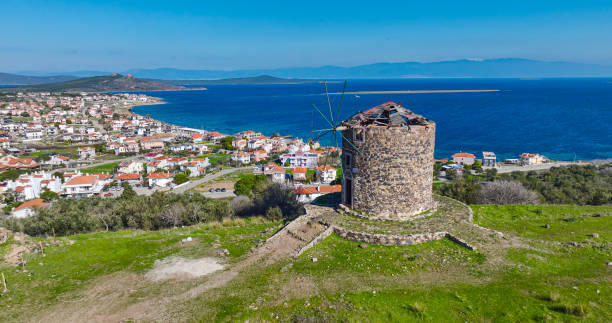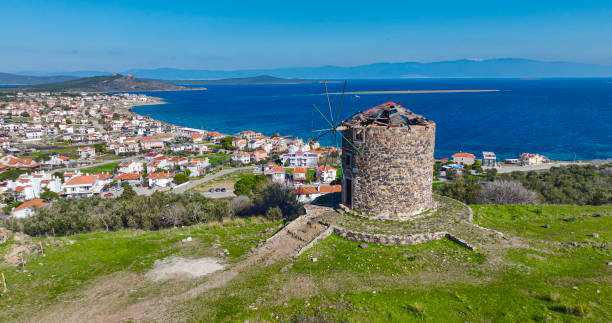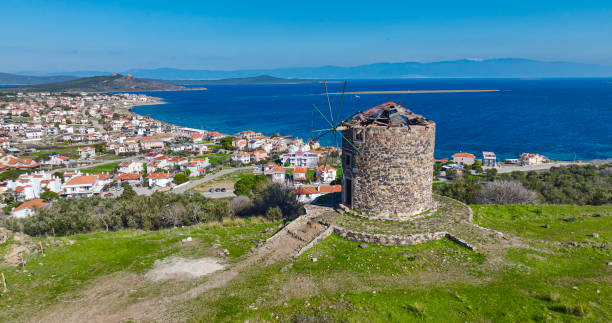
Cunda, officially known as Alibey Island, has been a crossroads of civilizations for millennia. Its cobblestone streets, crumbling church facades, and sun-bleached stone walls whisper stories of Greek fishermen, Ottoman traders, and the waves of migration that shaped the modern Aegean coast. You can explore all of the island’s places to visit in our guide.
Ancient Roots
The earliest traces of settlement on Cunda date back to the Hellenistic period. The island’s sheltered harbor made it a natural waypoint for maritime trade between the Aegean islands and the Anatolian mainland. Archaeological finds suggest continuous habitation from at least the 4th century BCE.
The Greek Period
For centuries, Cunda was home to a thriving Greek Orthodox community. The island’s most iconic landmark, Taksiyarhis Church — now a museum — stands as testament to this heritage. Built in the 19th century with stunning interior frescoes and an imposing bell tower, it remains one of the finest examples of ecclesiastical architecture in the region.
The Greek community built the stone houses that still define Cunda’s visual character: two-story structures with wooden balconies, wrought-iron railings, and bougainvillea gardens. Many of these buildings have been lovingly restored today — our hotel, Milos Cunda, preserves the original stonework while offering a modern comfort experience.
The Population Exchange
The 1923 Treaty of Lausanne brought the most dramatic shift in Cunda’s demographic history. The Greek Orthodox population was exchanged with Muslim communities, primarily from Crete and Lesbos. This population exchange created the unique cultural blend that defines Cunda today: Cretan culinary traditions merged with Aegean ingredients, Greek architecture absorbed into Turkish daily life. This culinary heritage is explored in detail in our Aegean gastronomy guide.
Modern Renaissance
After decades of quiet decline, Cunda experienced a cultural revival beginning in the 1990s. Artists, writers, and intellectuals discovered the island’s melancholic beauty and began restoring its architectural heritage. Today, Cunda is recognized as one of Turkey’s most important cultural preservation sites.
The island’s narrow streets are home to historic stone houses, a quiet pace of life, and restaurants serving the seasonal cuisine that has made the Ayvalık region famous. Our Aegean breakfast draws from exactly this tradition — local olive oil, fresh cheeses, and herbs foraged from the hillsides. To stay amid this living history, get in touch with us.
Experience Cunda at Milos
A stay immersed in the island's history and nature awaits you in the heart of Cunda.